
Planning an independent trip to North Africa often brings up one highly specific and entirely understandable question for international visitors: is it safe to drive in Morocco? It is completely normal to feel a bit apprehensive about navigating foreign roads, especially in a country known for its bustling medinas and vast, diverse landscapes. Whether you are dreaming of a coastal road trip along the Atlantic, navigating the dramatic winding paths of the High Atlas Mountains, or driving toward the golden dunes of the Sahara Desert, understanding the local driving culture is the key to a stress-free and unforgettable trip.
Countless tourists search for this exact information before finalizing their travel plans and vehicle reservations. Relying exclusively on public transportation, trains, or organized group tours can severely limit your freedom to explore at your own pace. Having your own vehicle allows you to discover hidden valleys, stop at authentic roadside tagine stands, and travel strictly on your own schedule.
At HALIMI CAR, we understand that renting a vehicle in a new country requires trust, preparation, and reliable information. This comprehensive guide provides an honest, balanced, and straightforward look at what it takes to drive safely in Morocco, ensuring you are fully prepared for the road trip of a lifetime.
Is It Safe to Drive in Morocco?
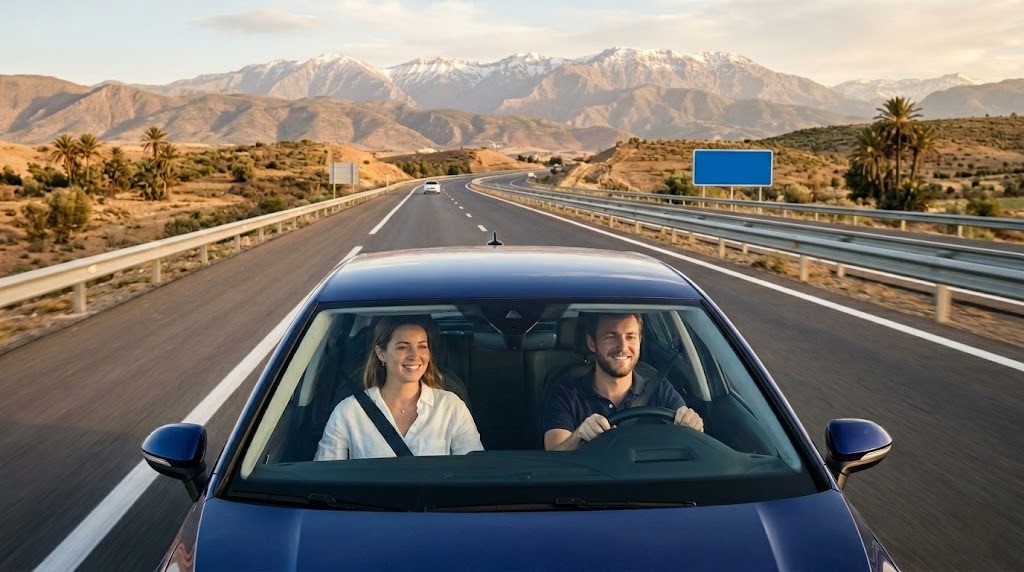
The short and direct answer is yes. For the vast majority of international tourists, driving in Morocco is a safe, manageable, and highly rewarding experience. The country boasts some of the most developed and well-maintained road infrastructures on the African continent. However, achieving safety on Moroccan roads requires a distinct shift in your driving mindset. You cannot drive here on autopilot as you might in your home country; you must be an active, observant, and defensive driver at all times.
The driving experience will vary drastically depending on exactly where your itinerary takes you. Modern toll highways connect major economic hubs and tourist destinations, offering a smooth, fast, and familiar driving experience that rivals European roads. However, as soon as you transition into busy city centers or remote rural villages, the environment changes significantly. You will find yourself sharing the road with a diverse mix of modern vehicles, heavily loaded transport trucks, motorbikes, pedestrians, and occasionally animal-drawn carts.
You will also frequently encounter police and Royal Gendarmerie checkpoints at the entrances and exits of towns, or at major national road intersections. These checkpoints are entirely normal, safe, and are in place to ensure public security and enforce traffic laws. When approaching a checkpoint, you must slow down immediately. If there is a stop sign, come to a complete halt and wait for the officer to physically wave you through. Often, they will simply gesture for tourists to continue without asking for documents, but you should always be polite, roll down your window, and be ready to present your driving papers if requested.
Road Conditions in Morocco
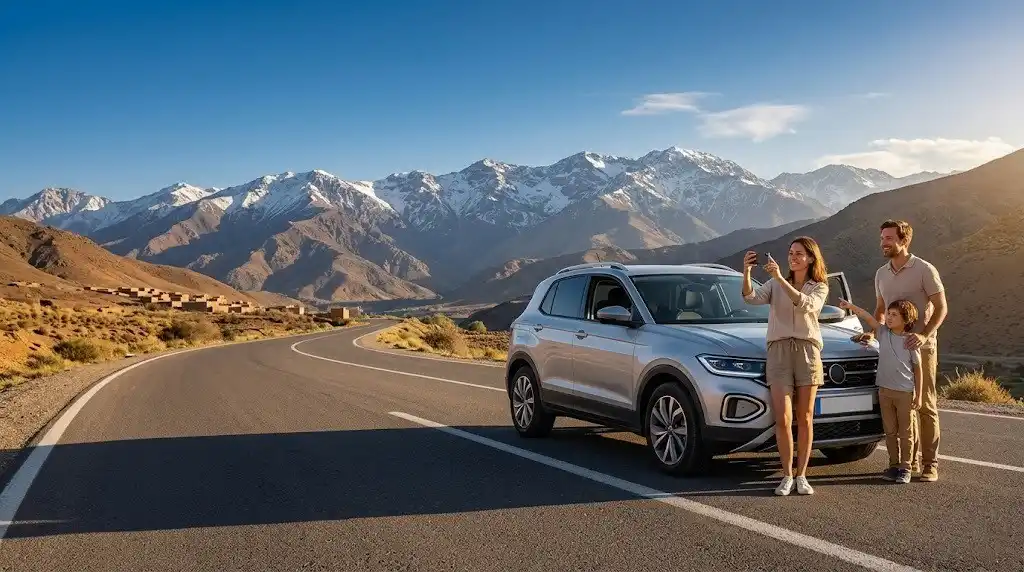
A thorough understanding of Morocco road conditions is essential for planning a realistic daily driving itinerary. The country’s road network is broadly divided into three main categories: modern toll highways, national roads, and secondary rural routes.
The toll highway system, managed by Autoroutes du Maroc, is exceptional. Connecting major cities like Tangier, Rabat, Casablanca, Marrakech, and Agadir, these multi-lane highways are well-paved, clearly marked, and feature regular, high-quality service stations equipped with fuel, clean restrooms, and restaurants. Tolls can be paid in cash using Moroccan Dirhams or by credit card at the respective booths.
National roads, known as routes nationales, are generally paved and in good condition, though they are mostly single-lane in each direction. On these routes, you will encounter slower-moving local traffic, requiring safe, patient, and calculated overtaking.
Road signs in Morocco follow standard international conventions and are written in both French and Arabic, making them very easy for international tourists to understand and follow. Speed limits and hazard warnings are clearly and frequently displayed.
One of the most important safety rules to adopt is to avoid night driving whenever possible. While the main toll highways are relatively safe and well-lit near cities at night, national and rural roads are often completely unlit. Hazards such as pedestrians walking on the shoulder in dark clothing, unlit bicycles, crossing livestock, and vehicles driving without proper headlights are extremely difficult to spot in the dark. Plan your daily driving itinerary so that you arrive at your hotel or riad well before sunset.
Driving in Moroccan Cities (Casablanca, Marrakech, etc.)
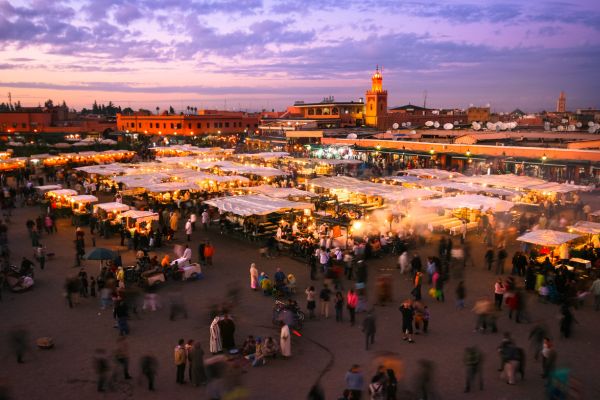
City driving in Morocco can initially feel chaotic and overwhelming to the uninitiated visitor. Major urban centers like Casablanca, Marrakech, and Tangier are characterized by heavy, continuous traffic, an abundance of scooters weaving unpredictably between cars, and a distinct lack of strict lane discipline among local drivers.
The traffic style is fluid and requires constant attention. Drivers often communicate with their horns, not necessarily out of anger or aggression, but simply to announce their presence or warn you that they are passing. You must constantly check your mirrors and blind spots, as motorbikes will frequently pass on both the left and the right sides.
Roundabouts are a major feature of Moroccan city driving, and the right-of-way rules can sometimes be confusing. In modern, signal-controlled roundabouts, vehicles already inside the roundabout generally have the right of way. However, on older or smaller roundabouts without specific yield signs, the strict legal rule often grants priority to traffic entering from the right. Watch the flow of traffic carefully, approach slowly, and yield appropriately based on the behavior of the cars around you.
Parking in Moroccan cities is uniquely managed by informal but officially recognized parking guards, known as gardiens de voitures, who typically wear high-visibility vests. They will guide you safely into a spot and watch your car while you are away. It is customary to pay them a small cash fee when you leave, usually between 5 to 10 Dirhams for a few hours of parking, or 20 Dirhams for overnight monitoring. This is a safe, reliable, and expected system that helps prevent vehicle damage and break-ins.
Driving in Rural & Desert Areas
Leaving the bustling cities behind introduces a completely different, much more tranquil driving experience, but it comes with its own unique set of geographic challenges.
Driving through the Atlas Mountains, such as navigating the famous and dramatic Tizi n’Tichka pass toward Ouarzazate, requires intense focus. The mountain roads are winding, feature steep drop-offs, and are frequently shared with slow-moving heavy transport trucks. Weather in the mountains can change rapidly, with heavy rain or even snow possible in the winter months. Take these roads very slowly, use your engine braking on steep descents to avoid burning out your brake pads, and never rush your journey.
If your travel itinerary takes you toward deep desert regions like Merzouga, Zagora, or M’hamid El Ghizlane, expect long stretches of remarkably straight, flat roads. In these areas, drifting sand can sometimes blow across and obscure the asphalt, reducing your tire traction.
The importance of choosing the correct vehicle becomes paramount for rural exploration. While a standard compact economy car is perfectly fine for coastal highways and cities, renting a robust SUV provides better ground clearance, superior suspension, and enhanced comfort if you plan to explore mountain passes or slightly rougher terrain.
Additionally, fuel planning is absolutely critical in rural areas. While major coastal routes have plenty of modern gas stations, the distance between fuel stops increases significantly in the deep mountains and desert regions. A smart driving rule of thumb is to fill up your tank whenever it drops to the half-full mark to avoid any stressful situations in remote locations.
Essential Driving in Morocco Tips
To ensure a smooth, legal, and stress-free journey, keep these essential driving in Morocco tips in mind before you get behind the wheel:
- Speed limits are strictly enforced: Speed limits are heavily monitored by police using hidden, handheld laser radars. The limit is generally 60 km/h in urban areas, 100 km/h on national roads, and 120 km/h on highways. Fines for speeding are strict and must typically be paid on the spot in cash.
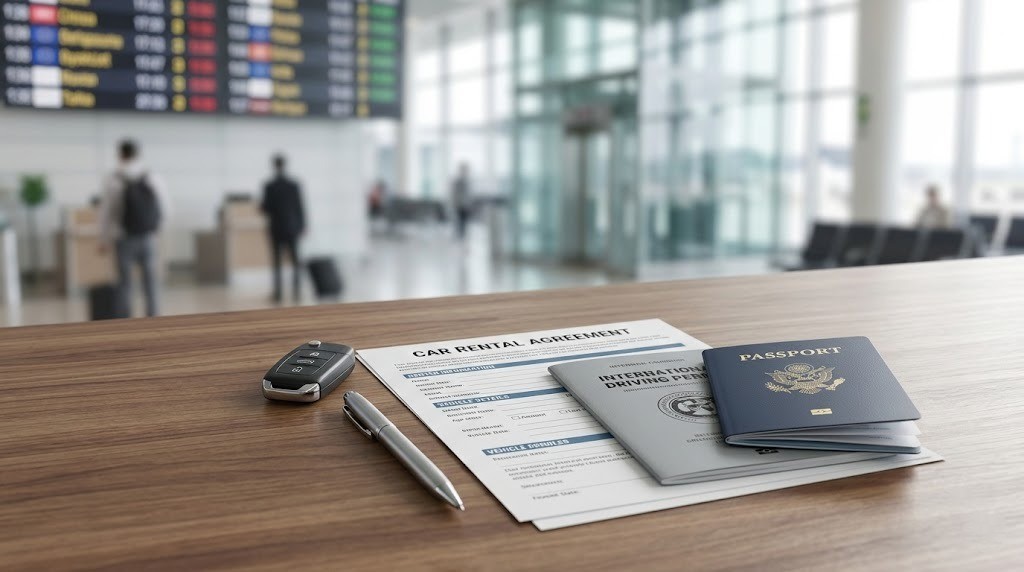
- Documents to carry at all times: Always have your physical domestic driving license, your passport, and the vehicle’s registration and rental insurance documents in the car.
- Insurance is non-negotiable: Ensure you have comprehensive insurance coverage. Check exactly what your rental agreement covers, particularly regarding windshield damage or tire punctures, which are common occurrences on rougher rural roads.
- Google Maps reliability: Google Maps works very well across Morocco for real-time navigation and traffic updates. However, cellular service can frequently drop in the deep mountains or desert. Always download offline maps for your planned routes while connected to your hotel’s Wi-Fi.
- Avoid aggressive driving: Assume that other drivers, pedestrians, or animals might act unpredictably. Maintain a generous following distance, stay calm, and never respond to aggressive driving or road rage.
- Emergency numbers: In case of an emergency, dial 15 for the fire department or medical ambulance, 19 for urban police within city limits, and 177 for the Royal Gendarmerie if you are outside city limits.
Is It Safe for Tourists to Rent a Car in Morocco?
Many visitors weigh their transportation options and ask if it is safe to rent a car in Morocco compared to relying on group tours, private transfers, or the train network. The answer is absolutely yes. Renting a car from a reputable, legally registered local agency is entirely safe and offers the ultimate travel flexibility for international tourists.
Renting your own vehicle allows you to escape the crowded tourist buses and experience the genuine, warm hospitality of rural Morocco at your own pace. You can pull over for breathtaking landscape photographs whenever you wish and alter your daily itinerary on a whim.
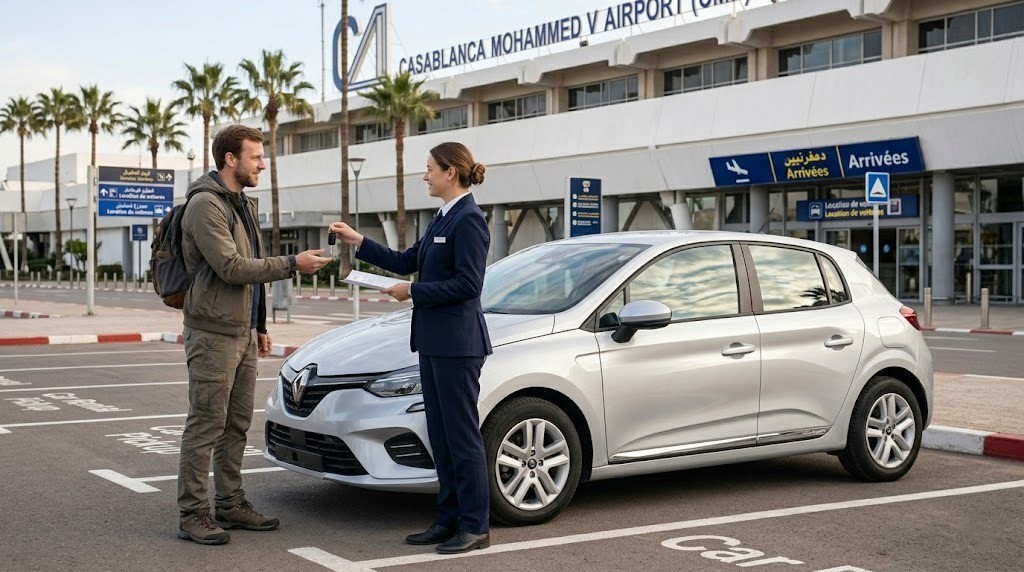
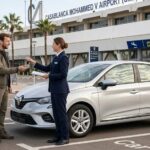
To make the process even safer and vastly more convenient, we highly recommend opting for an airport car rental Morocco service. Agencies like HALIMI CAR offer direct airport pickup and drop-off delivery. This means you can bypass the stress of negotiating with local taxi drivers upon your arrival. You simply collect your keys, load your luggage, and merge directly onto the highway toward your first destination. For visitors flying into the country’s main international hub, consider reviewing our comprehensive guide on Casablanca Airport Car Rental.
Car Rental Morocco Advice (Expert Tips)
Finding the right vehicle requires a bit of diligence and research. Here is our expert car rental Morocco advice to ensure you secure the best experience and avoid common tourist pitfalls:
- Choose recent vehicles: Road trips in Morocco can easily cover vast distances. Always rent from a company that guarantees recent models. Older vehicles are significantly more prone to mechanical failure, particularly on steep mountain inclines or in high summer temperatures.
- Understand the deposit policy: Most standard rental agencies require a security deposit held on a valid credit card in the main driver’s name. Clarify the exact amount of this deposit and the specific timeline for its release before signing the rental contract.
- Inspect the car before pickup: Before driving away from the agency or airport, inspect the car thoroughly with the rental agent. Take a slow, clear video on your smartphone of the car’s exterior, interior, fuel level, and exact mileage. Note any existing scratches or dents on the physical contract to protect yourself from unfair charges upon return.
- Book in advance in high season: Morocco is a highly popular global destination, particularly during the spring and autumn months. Quality rental fleets sell out very quickly during these peak times. Book your car weeks or even months in advance to secure the exact vehicle category you need.
Rent with Confidence in Morocco
Are you looking for a highly reliable vehicle for your upcoming Moroccan journey? HALIMI CAR offers a premium, modern fleet of well-maintained vehicles (2021–2026 models), ranging from agile and economical city cars to robust SUVs perfectly suited for the Atlas Mountains. We pride ourselves on transparent pricing with absolutely no hidden fees. Furthermore, we provide flexible airport delivery across the region to ensure your trip starts smoothly the moment you land.
Contact HALIMI CAR on WhatsApp: +212 646 666 881
Ready to Drive in Morocco?
Ultimately, driving in Morocco is an incredibly rewarding way to see the country, offering unmatched freedom to explore everything from bustling, historic souks to silent, sweeping desert dunes. While the traffic flow and driving habits may be different from what you are used to back home, applying caution, respecting the local rules, and practicing defensive driving will ensure your absolute safety. With an excellent network of highways and clear international signage, an independent road trip is well within the capabilities of the average, confident driver.
If you are looking for a trustworthy and professional partner for your journey, HALIMI CAR is based in Settat and offers seamless vehicle delivery right to your airport terminal. We provide modern vehicles, comprehensive insurance options, and dedicated local support to give you complete peace of mind on the road.
Are you ready to plan your itinerary and secure your vehicle? Let us help you find the perfect car for your Moroccan road trip today.
Related posts